



 Bill Choja Okane
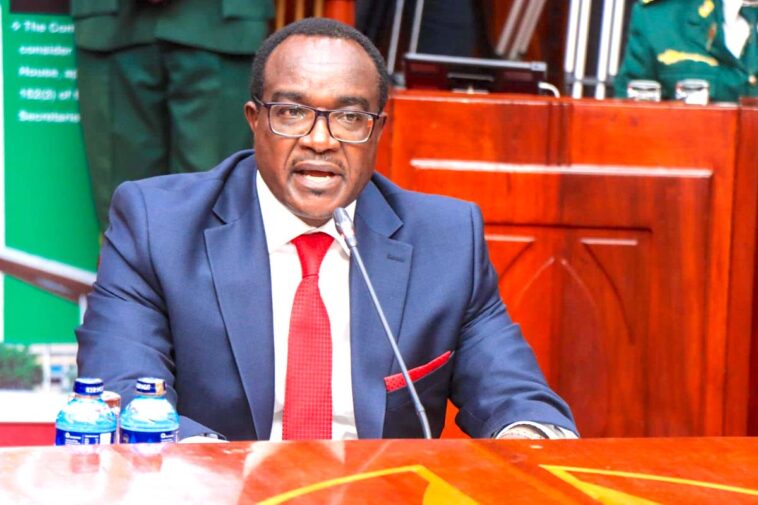
Education Cabinet Secretary Julius Ogamba has firmly dismissed reports that the government has scrapped capitation for free primary and secondary education. Speaking during a press briefing on Saturday, July 26, Ogamba clarified that the government has only reduced capitation allocations due to budgetary constraints in the 2025/2026 fiscal year.
Ogamba attributed the cutbacks to increased student enrolment, driven largely by the government’s continued commitment to the 100 per cent transition policy.
“According to government policy, each senior secondary student should receive Ksh22,244. However, due to budget limitations, we have been unable to meet that amount,” Ogamba explained.
He emphasized that the reduction does not signal the end of free education in Kenya.
“We have not abolished free primary or secondary education. What we’ve done is reduce the capitation due to budgetary pressures,” he added.
Ogamba stressed that access to free and compulsory basic education remains a constitutional right and that the government has no intention—or legal authority—to take that right away.
To address the funding gap, the Ministry of Education, in collaboration with the National Treasury, has begun lobbying Parliament for additional financial support. The CS reaffirmed the administration’s dedication to ensuring every child has access to quality education.
“President William Ruto’s administration remains fully committed to supporting education. We are working to secure the resources needed to uphold this critical national obligation,” Ogamba said.
His remarks come just two days after Treasury CS John Mbadi acknowledged that the government is struggling to sustain full capitation for free basic education due to ongoing financial constraints.
Appearing before the National Assembly’s Education Committee on Thursday, July 24, Mbadi revealed that the Treasury can no longer fund the full Ksh22,244 per secondary school student. Currently, the government can only provide Ksh16,600.
“If you analyze the annual budget against the total student population, the per-student funding now stands at Ksh16,600. Disbursement is done in phases: 50 per cent in Term 1, 30 per cent in Term 2, and 20 per cent in Term 3,” Mbadi told MPs.
During the same session, Mbadi also warned of possible funding cuts for universities, including reduced capitation for students and potential closure of some campuses.


GIPHY App Key not set. Please check settings